
Make the workload visible
Full calendars, consecutive meetings and unclear priorities can reduce the time employees have for themselves. Workplace wellbeing requires more than a focus on individual habits. Consider how work is allocated and which expectations take priority.
Make room for breaks
Breaks can be repeatedly postponed when no time is set aside. Discuss meeting gaps and expectations about availability as a team to make breaks workable. Not expecting employees to remain constantly available in their free time is part of this approach.
Position the event as support
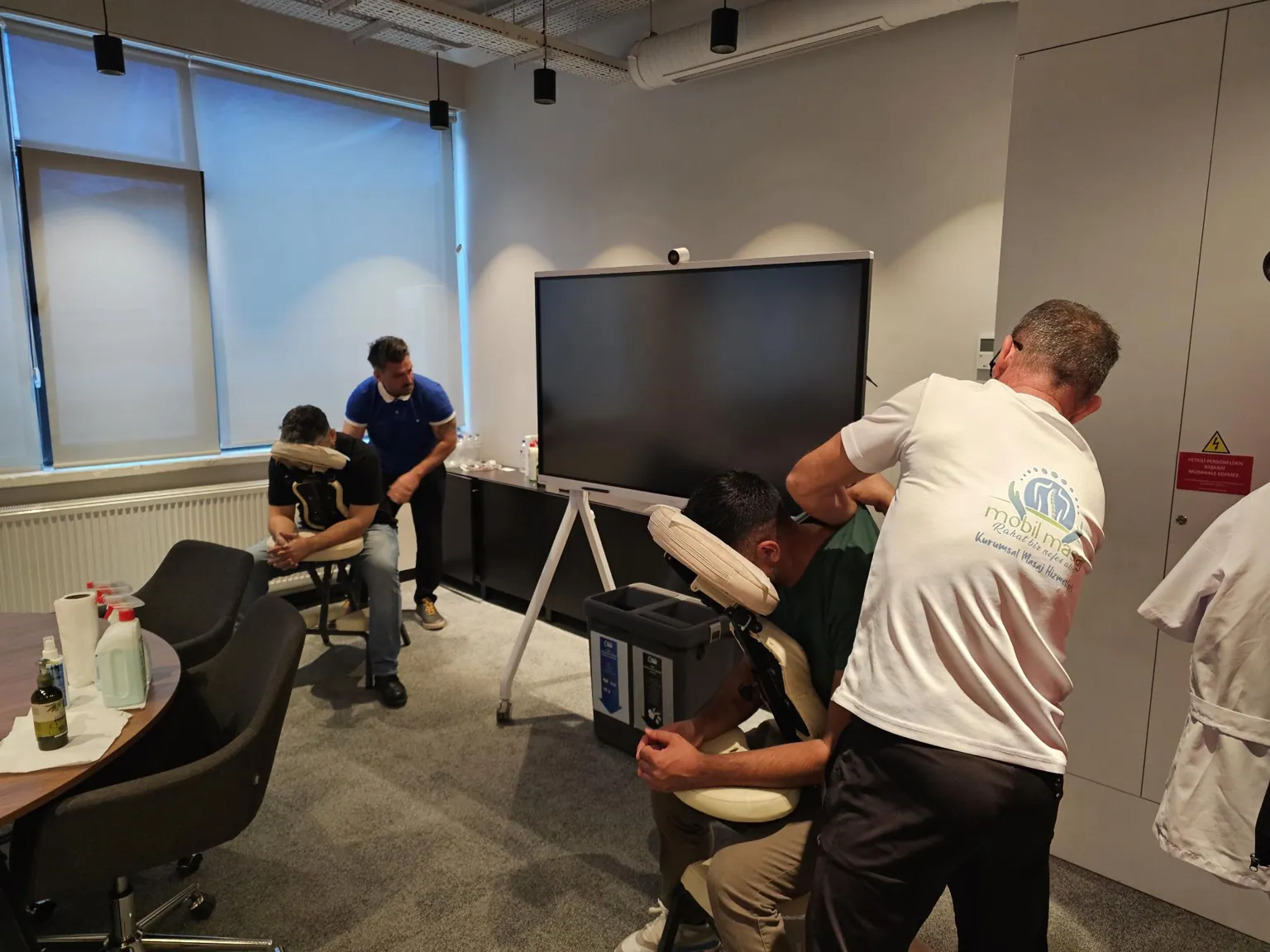
Massage, a creative workshop or a team gathering can offer time for employees during the day. Such an event does not mean workload problems are solved and does not replace professional mental-health support.
Listen to employees
Use brief feedback to learn which activities were useful and what made participation difficult. Create opportunities to discuss work arrangements without asking for personal health information. Share routes to appropriate professional support when difficulties persist.