Your wellbeing is our happiness.
Mobil Masaj Türkiye
  1. Home
  2. Guides
MOVEMENT BREAKS FOR EMPLOYEES

A short break from the screen. Room to move.

Twelve movements and break ideas for desk workers: look at the starting position, read the steps and choose what feels comfortable for you.

Before you begin
  • For seated movements, choose a solid, stable chair without wheels and keep your feet on the floor.
  • Start slowly and breathe normally. Do not bounce or force the movement.
  • Stop if you feel pain, dizziness or numbness. If you have an existing condition or recent surgery, discuss suitability with a healthcare professional.
This is general information, not an individual exercise or treatment plan. Images are illustrative; read the instructions as well.
Go to videos
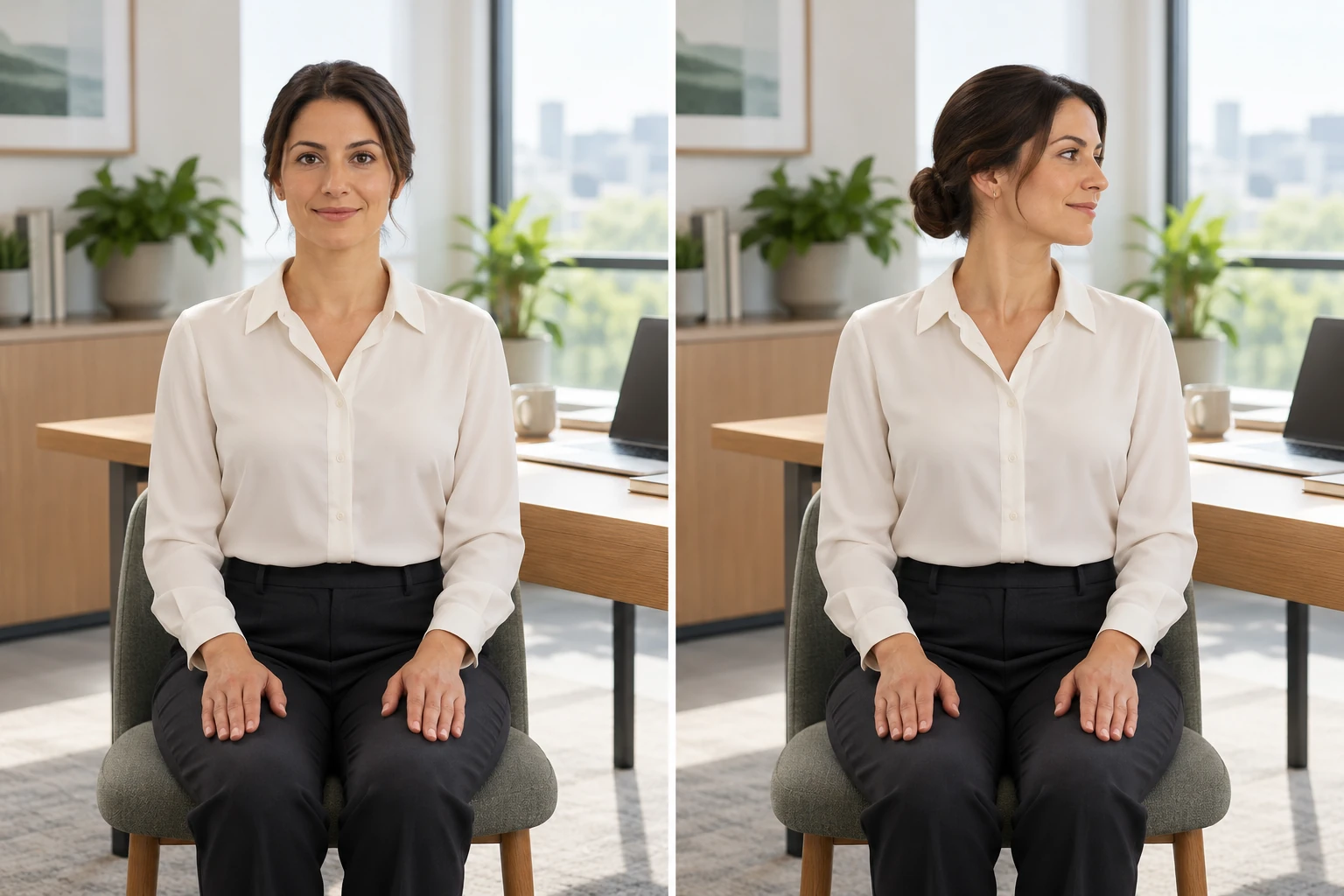
Look comfortably to the side from a forward-facing position.
01 · Neck and shoulders

Slow neck turns

Seated · 3 repetitions each way · hold for 5 seconds
  1. Sit upright with relaxed shoulders.
  2. Look comfortably to the left; hold for 5 seconds.
  3. Return to the centre and repeat to the right.

Take care: Do not push your head with your hands.

Source: NHS
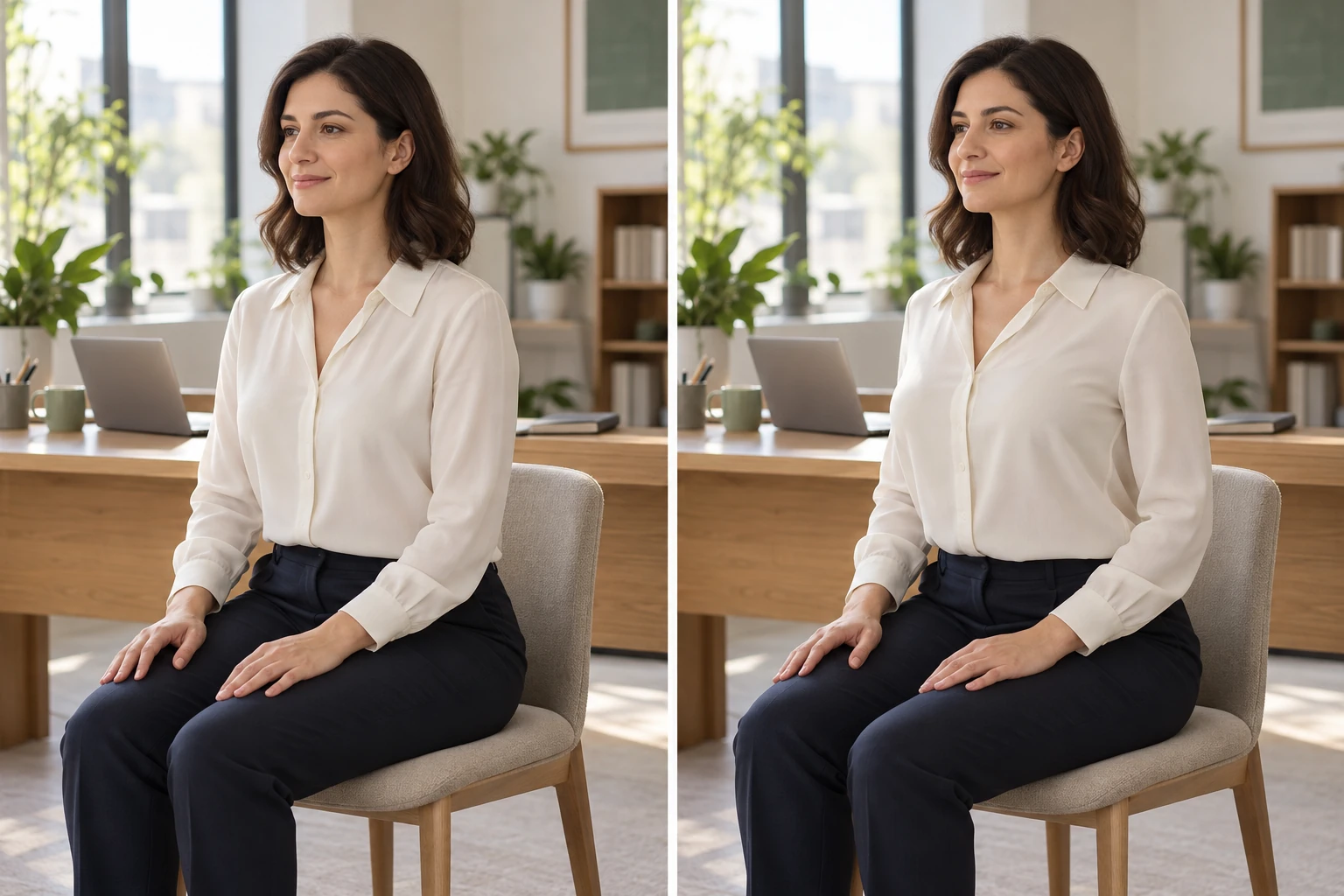
From a relaxed position, move the shoulders a little back and down.
02 · Neck and shoulders

Let the shoulders move back and down

Seated or standing · A short, gentle movement break
  1. Stand or sit upright with your arms relaxed.
  2. Move your shoulders back and down in a small, controlled movement.
  3. Return to a relaxed position without holding your breath. Try a few times without forcing.

Take care: Do not pull your shoulders hard; large circles are unnecessary.

Source: Mayo Clinic
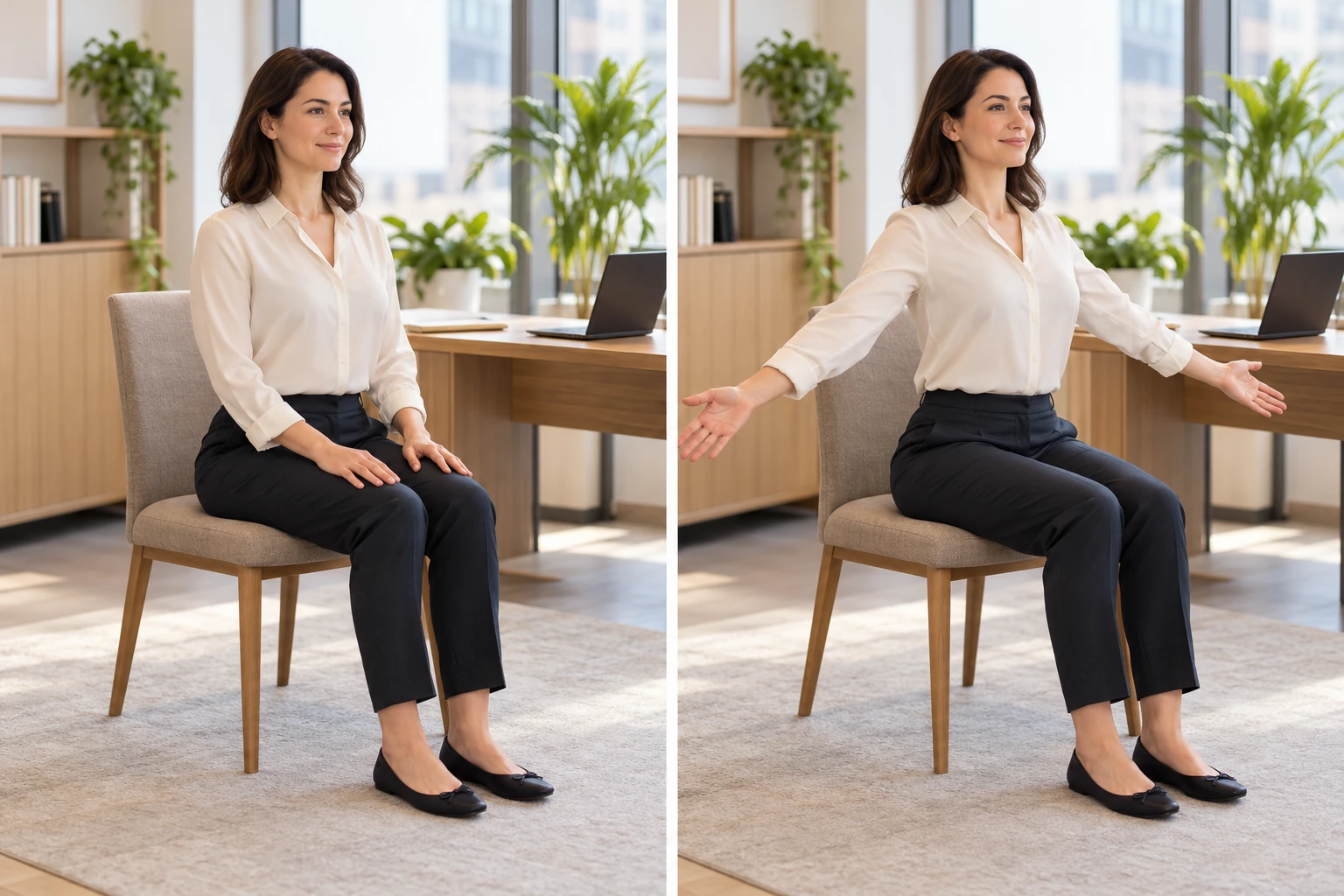
Arms at your sides; gently open the chest.
03 · Trunk

Open the chest

Seated · 5–10 seconds · 5 repetitions
  1. Sit upright without leaning against the chair back.
  2. With shoulders back and down and arms out to the sides, gently lift the chest forward and up.
  3. Hold, then relax.

Take care: Do not arch backwards excessively.

Source: NHS
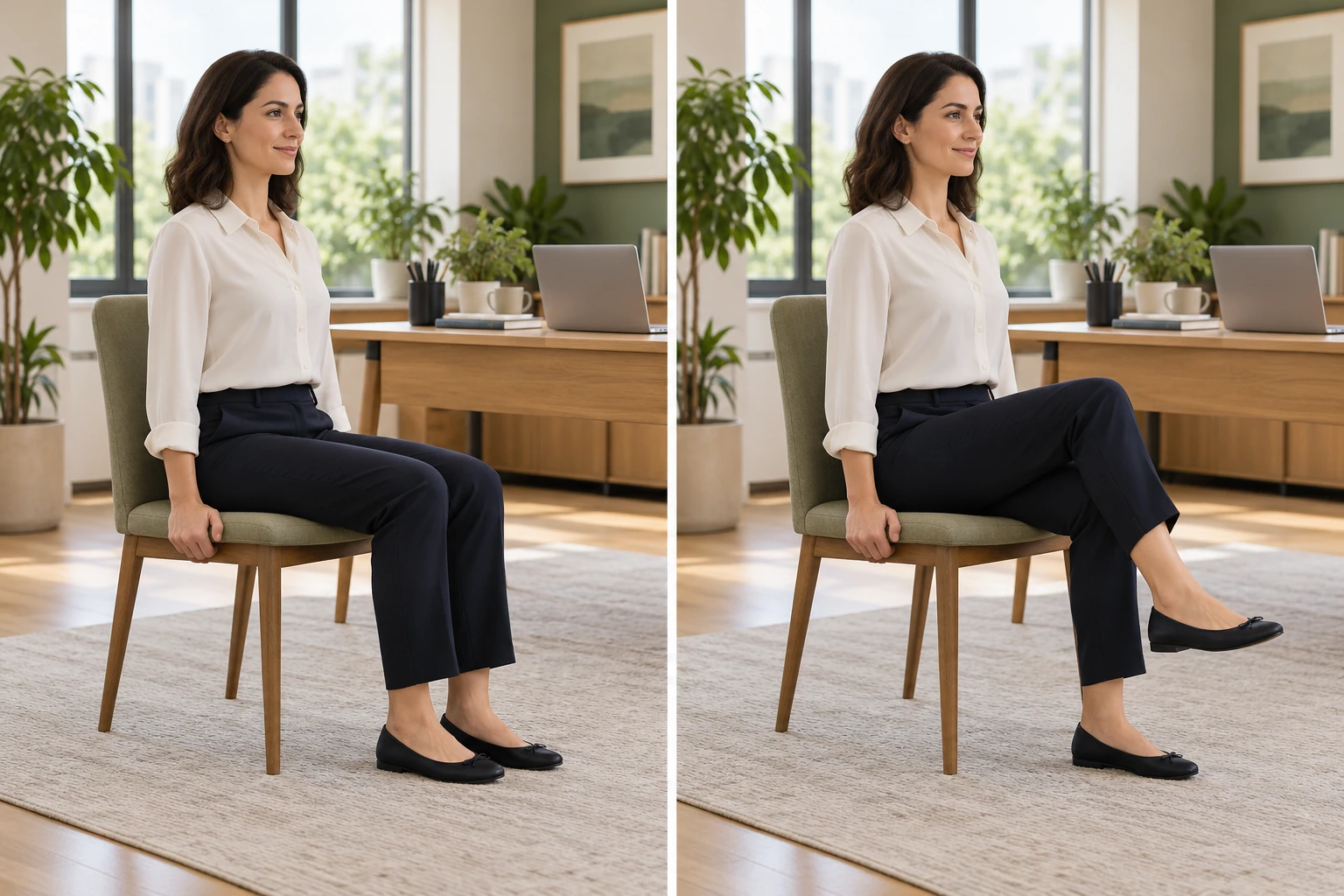
Raise one knee, then lower it with control.
04 · Legs and feet

Alternating seated knee lifts

Seated · 5 lifts with each leg
  1. Sit upright and hold the chair for support.
  2. With the knee bent, lift your foot and lower it.
  3. Repeat with the other leg.

Take care: Do not swing your trunk.

Source: NHS
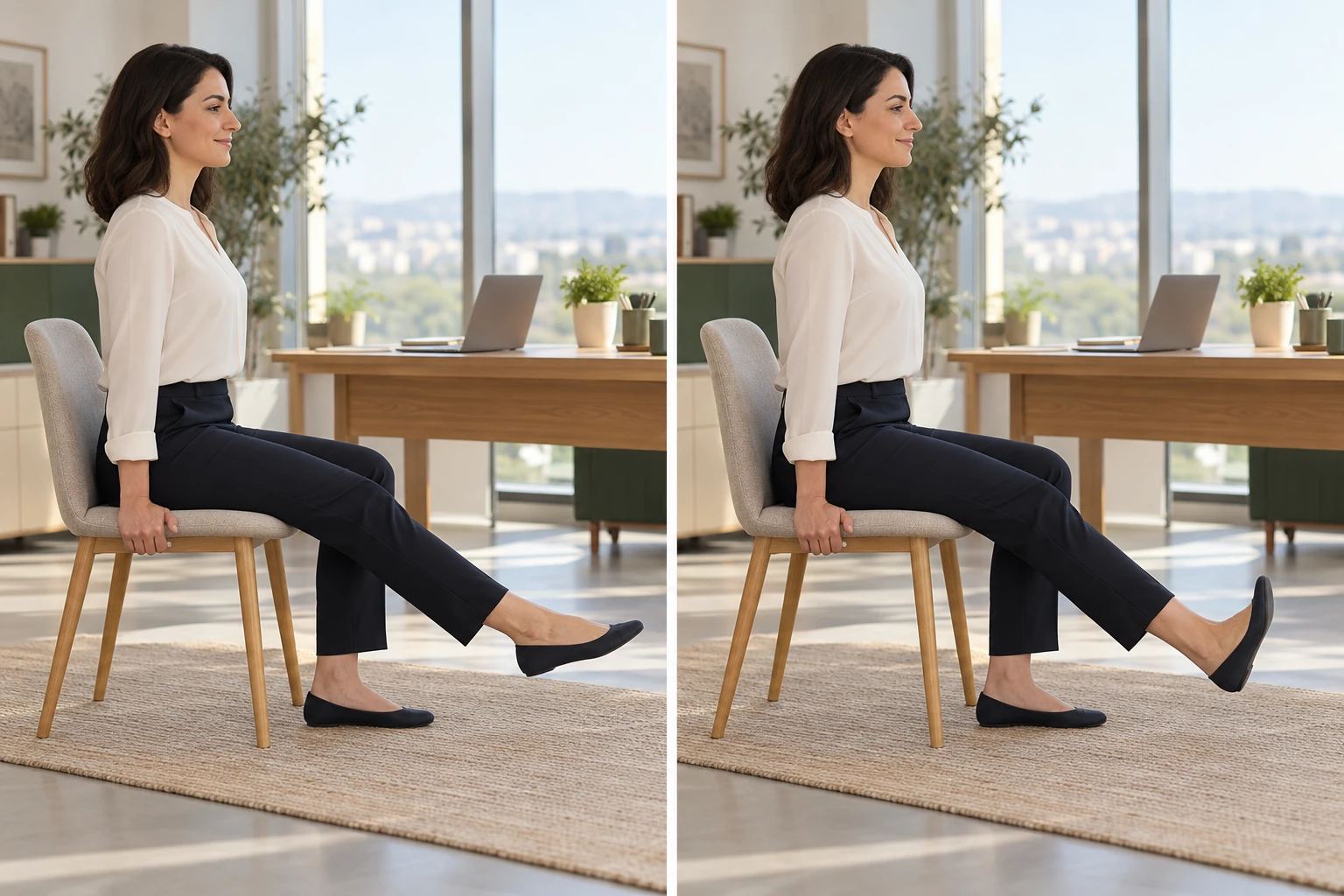
Point the toes away, then towards you.
05 · Legs and feet

Move the ankle forwards and back

Seated · 2 × 5 repetitions with each foot
  1. Hold the chair for support and straighten one leg with the foot off the floor.
  2. Point the toes away, then towards you.
  3. Repeat with the other foot.

Take care: Do not strain your knee.

Source: NHS
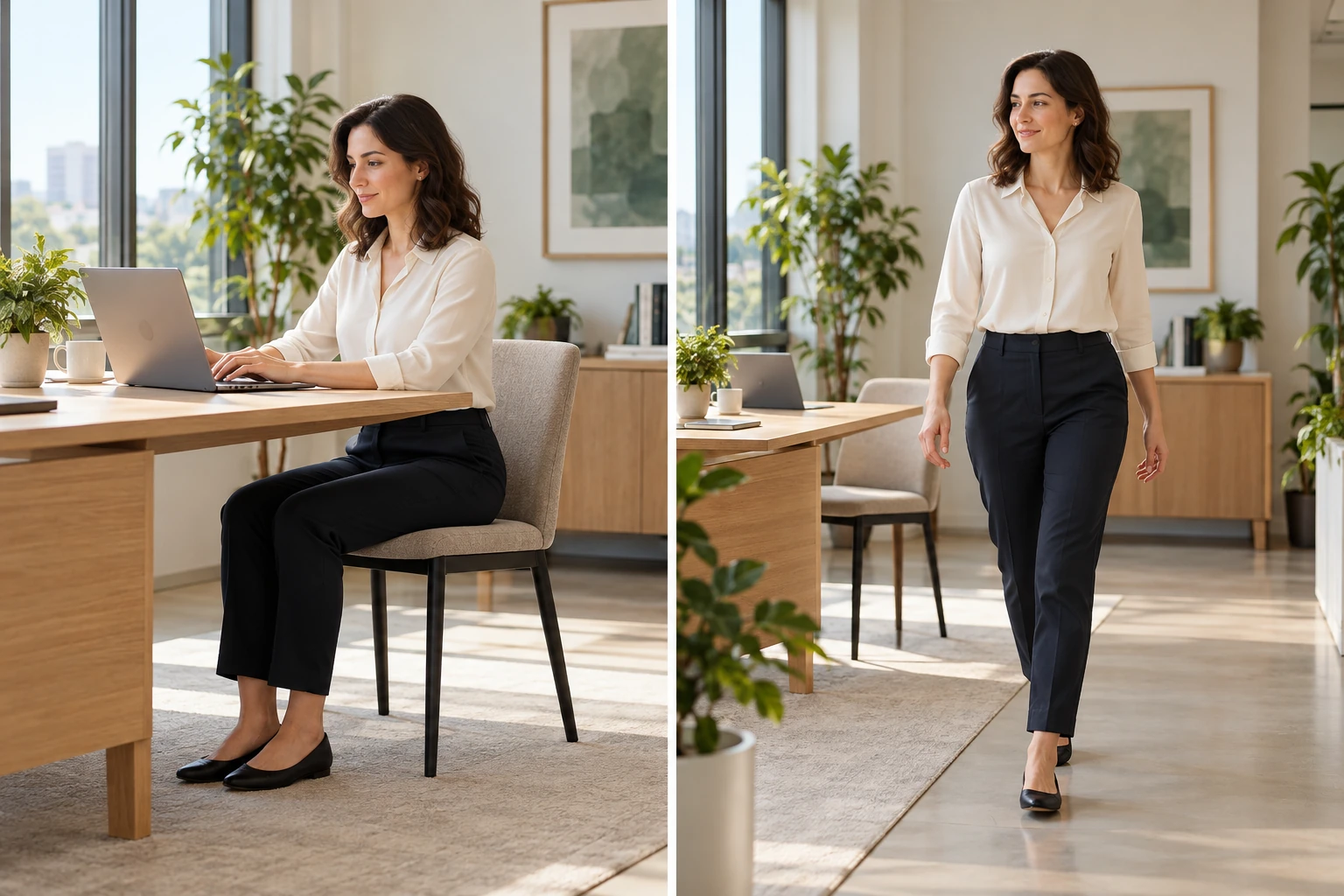
Stand up from sitting and walk comfortably in a clear area.
06 · Whole body

A short walk away from the screen

Standing · A short break that suits you
  1. Pause your work safely and check the space around you.
  2. Take a short walking break at a pace that suits you.
  3. On returning, check your screen, seat height and foot support again.

Take care: Keep the corridor clear; you do not need to use stairs or do balance exercises.

Source: Mayo Clinic
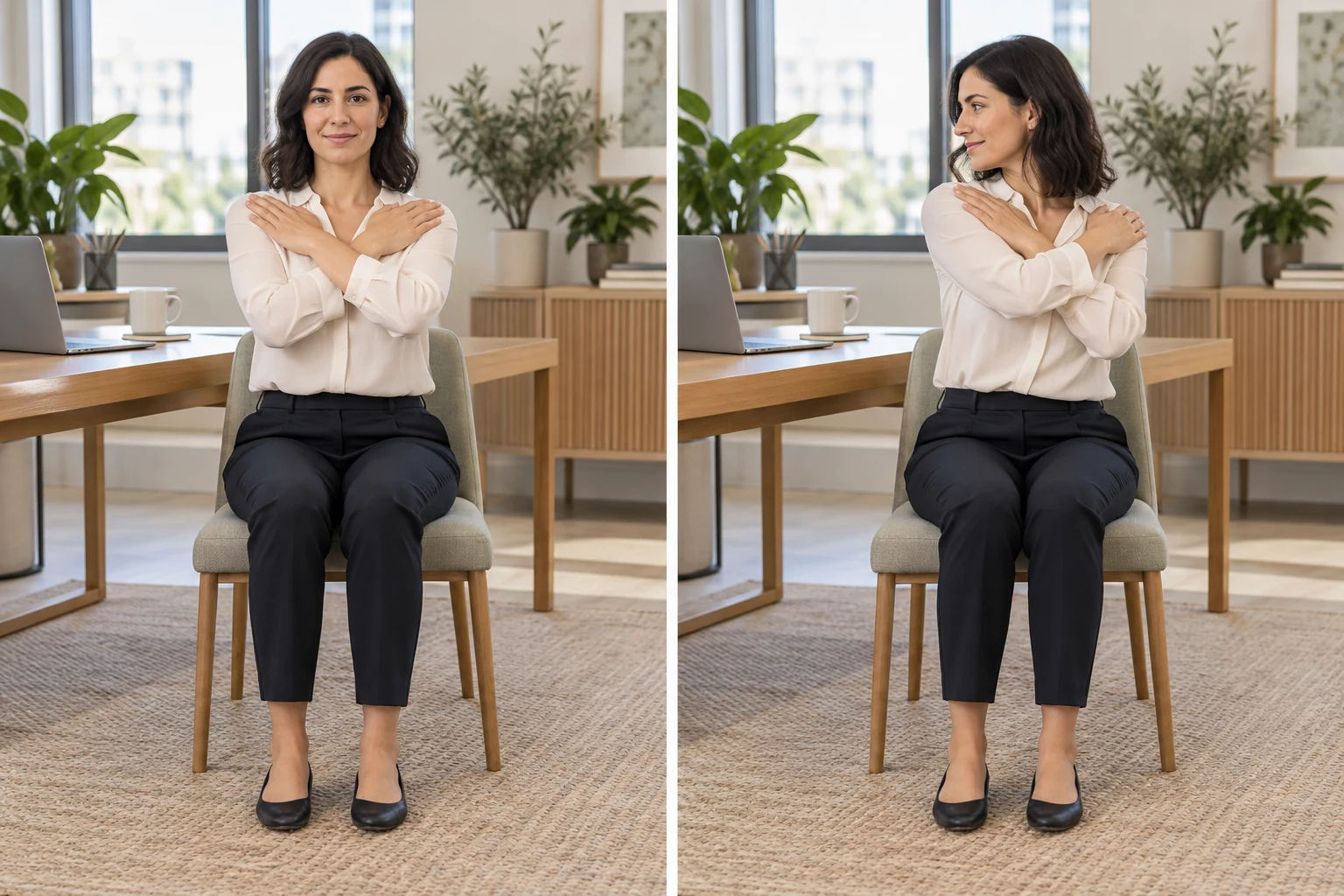
Keep the hips still and turn within a comfortable range.
07 · Trunk

A gentle seated trunk turn

Seated · Up to 10 seconds each way
  1. Sit upright with feet on the floor and arms crossed over your chest.
  2. Keep your hips still while slowly turning your trunk to one side.
  3. Hold comfortably, return to the centre and repeat on the other side.

Take care: Do not pull on the chair to force the turn.

Source: Newcastle Hospitals
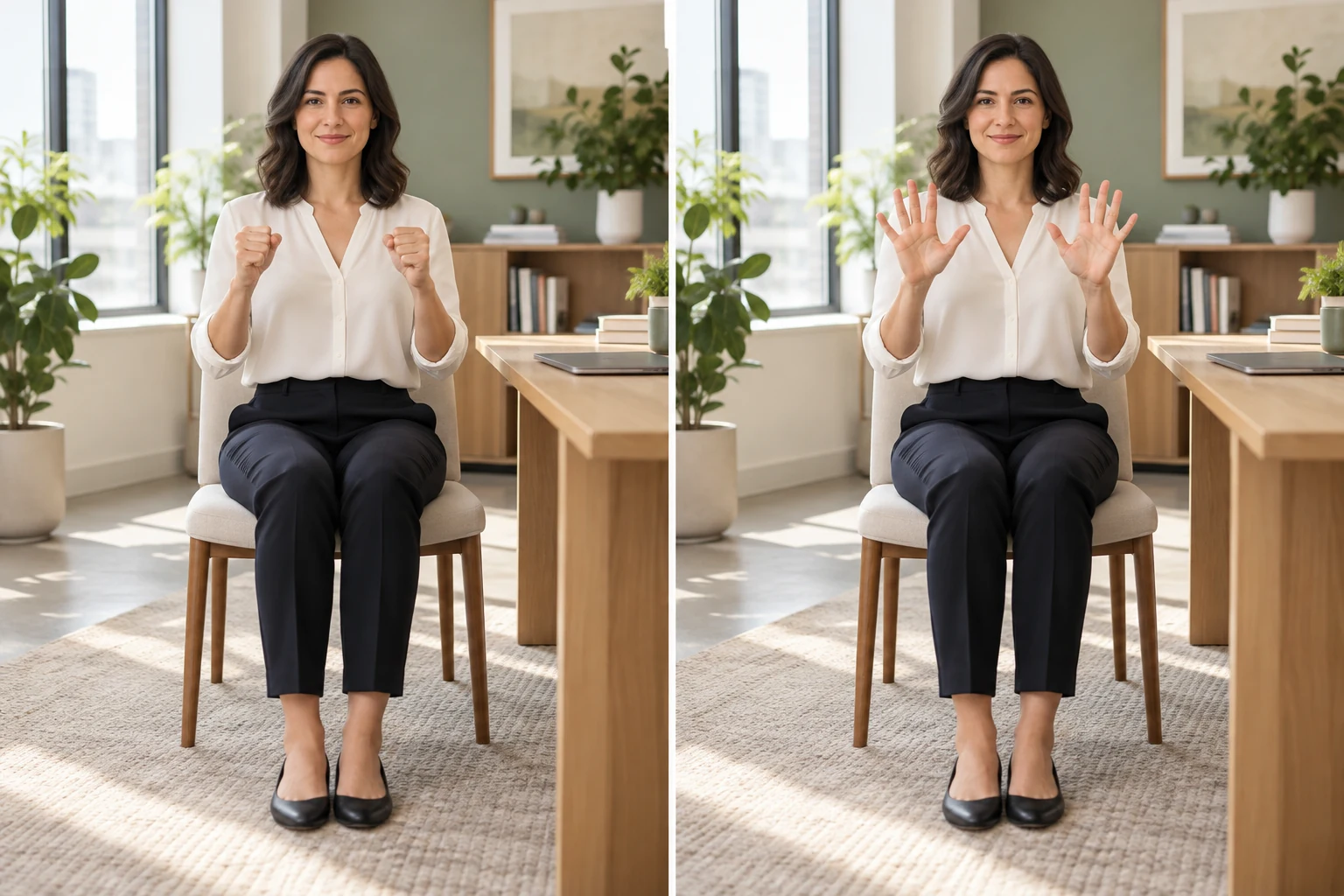
From a loose fist to comfortably open fingers.
08 · Hands and wrists

Open and close the hands

Seated or standing · 3 slow repetitions
  1. Relax your shoulders and hold your hands comfortably in front of you.
  2. Make a loose fist without squeezing, then open your fingers.
  3. Repeat the movement slowly.

Take care: Do not press the fingers backwards.

Source: Newcastle Hospitals
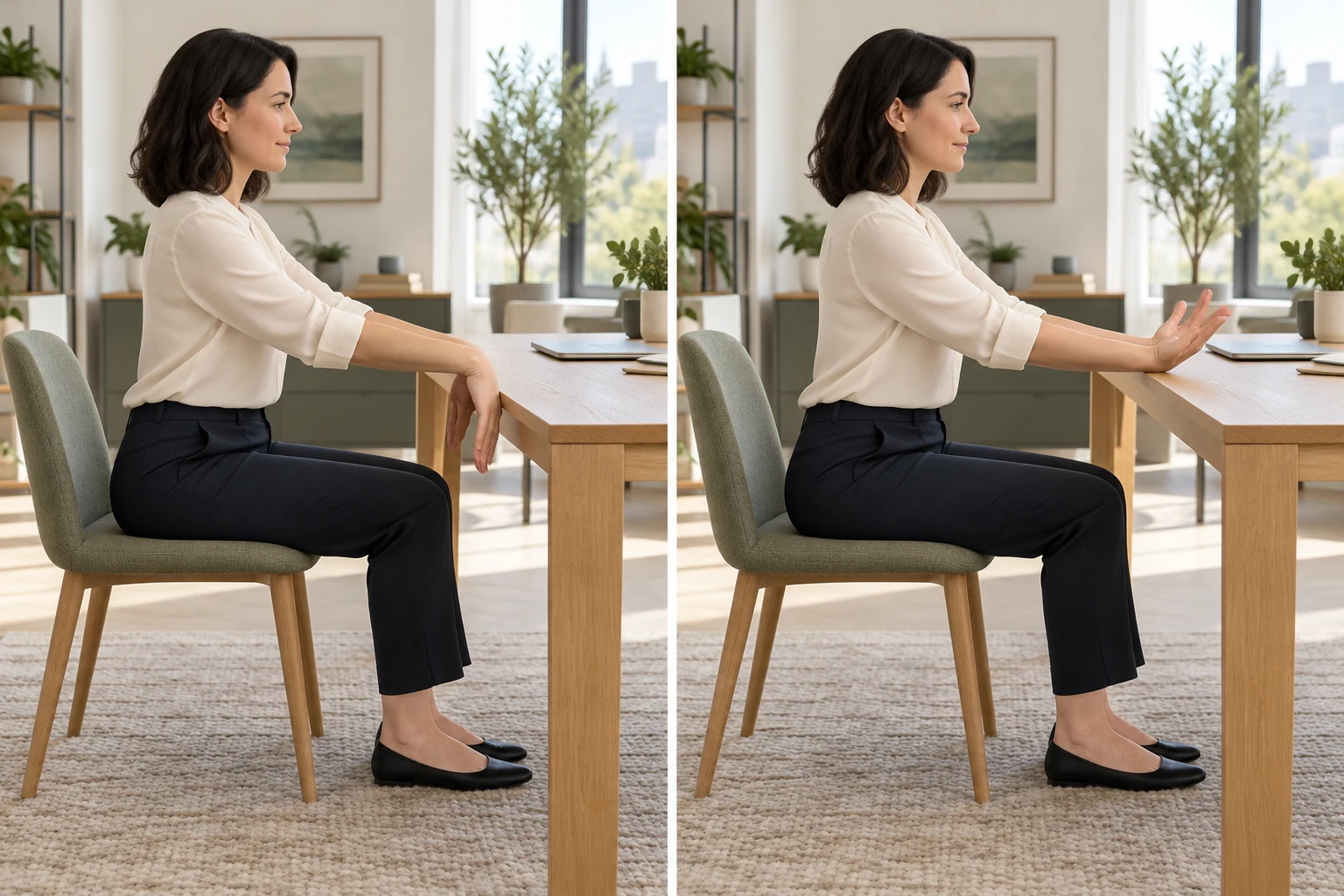
Support the forearms and move the wrists through a small range.
09 · Hands and wrists

Move the wrists up and down

Seated · 3 slow repetitions
  1. Support your forearms, leaving the hands free.
  2. Move your wrists down, then up within a comfortable range.
  3. Keep your fingers relaxed and return to the start.

Take care: Do not pull with your other hand; stop if numbness occurs.

Source: Newcastle Hospitals
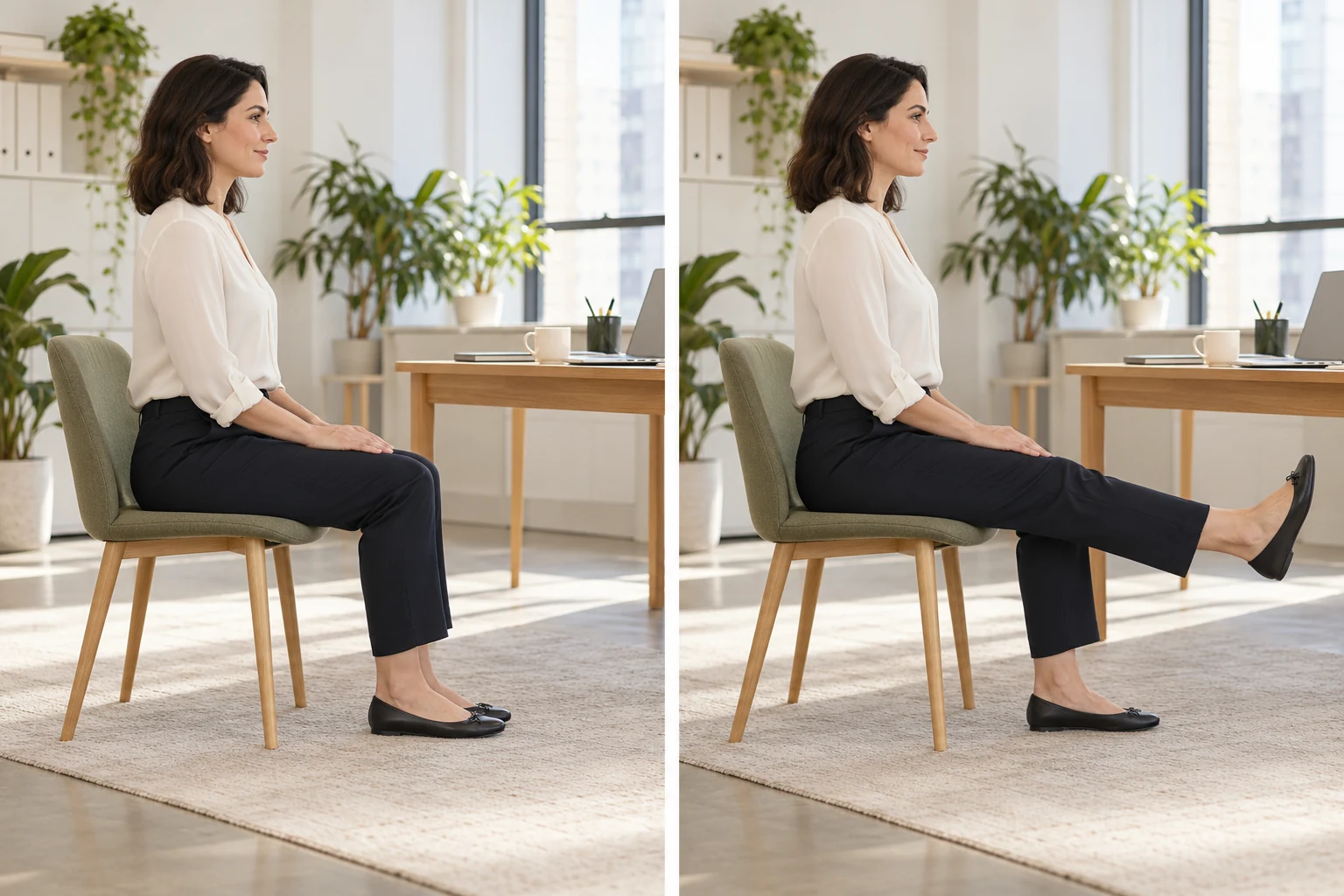
Extend one leg forwards while the other foot stays on the floor.
10 · Legs and feet

Seated knee extension

Seated · 2 × 5 repetitions per leg · about 3 seconds
  1. Sit upright with knees at roughly a right angle and feet on the floor.
  2. Extend one leg forwards and hold for about 3 seconds.
  3. Lower with control and repeat with the other leg.

Take care: Use fewer repetitions and a smaller movement range if needed.

Source: North Tees NHS
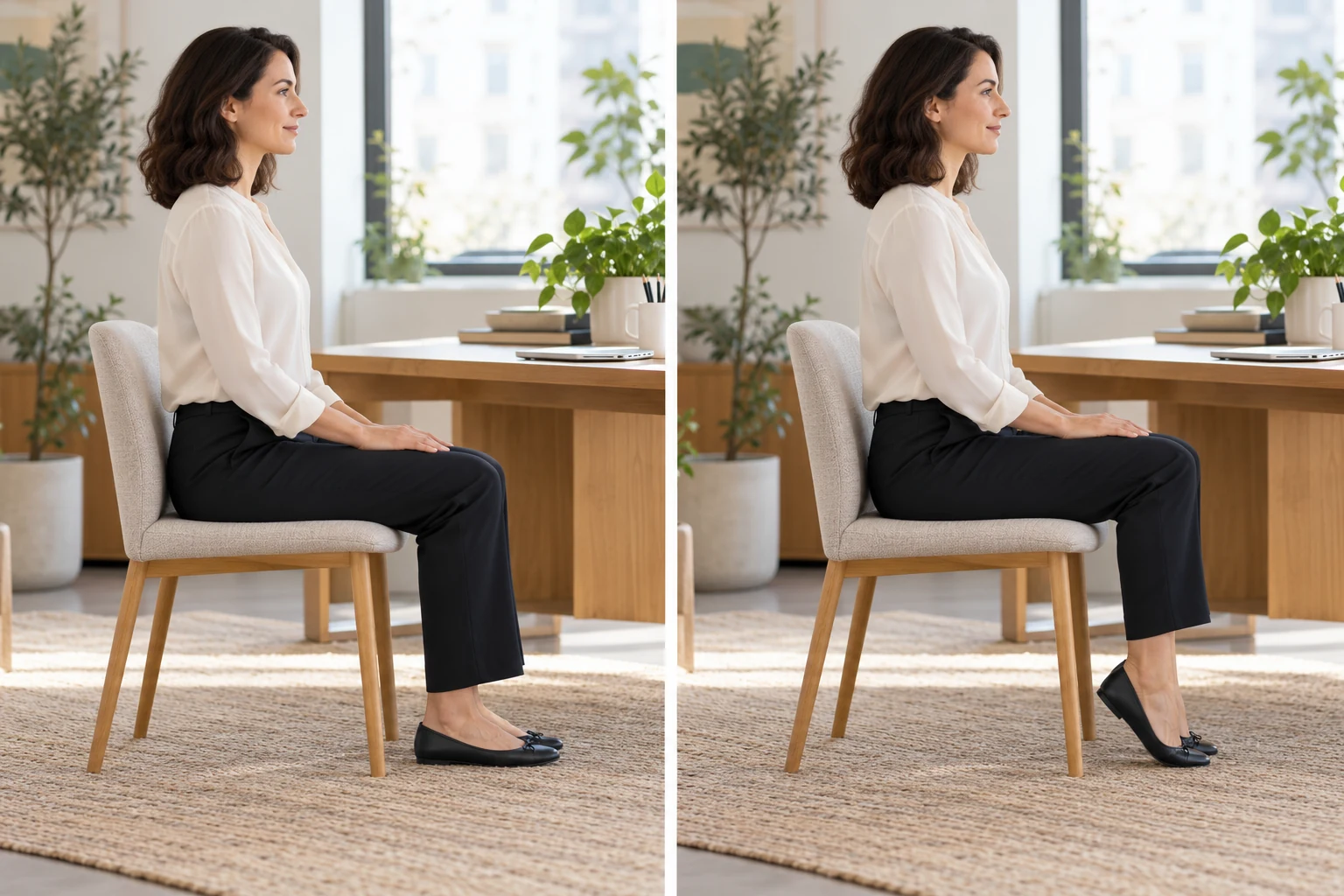
Raise the heels while keeping the fronts of the feet on the floor.
11 · Legs and feet

Seated heel raises

Seated · 2 × 5 controlled repetitions
  1. Sit upright with your feet on the floor.
  2. Keep the fronts of both feet on the floor and slowly raise both heels.
  3. Lower with control.

Take care: You do not need to stand; a comfortable height is enough.

Source: North Tees NHS
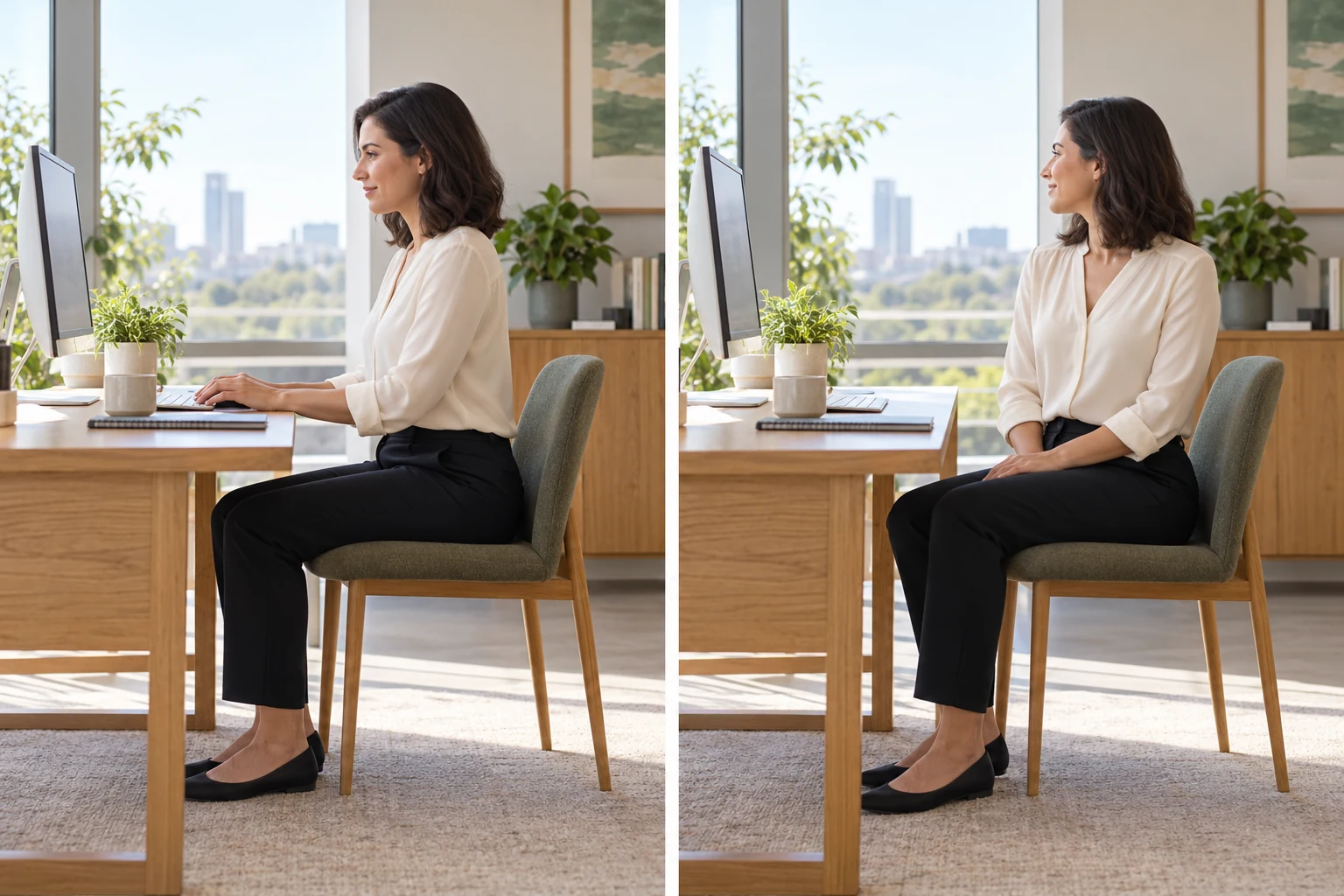
Shift your gaze from the nearby screen to a distant point.
12 · Eye break

The 20–20–20 screen break for your eyes

Seated or standing · Every 20 minutes · at least 20 seconds
  1. Look away from the screen.
  2. Look at a point about 6 metres away or farther for at least 20 seconds.
  3. Return to your work and remember the next screen break.

Take care: Do not look at the sun. Discuss persistent vision symptoms with an eye doctor.

Source: American Academy of Ophthalmology

Let’s plan your next good day together.

Share your headcount, date and city and we will prepare a tailored proposal.

Request a corporate quote