
What is posture?
Posture is the overall position the body takes when standing, sitting or moving. Long hours at a desk, together with screen height, chair settings and break habits, can affect a person's everyday posture.
What is posture analysis?
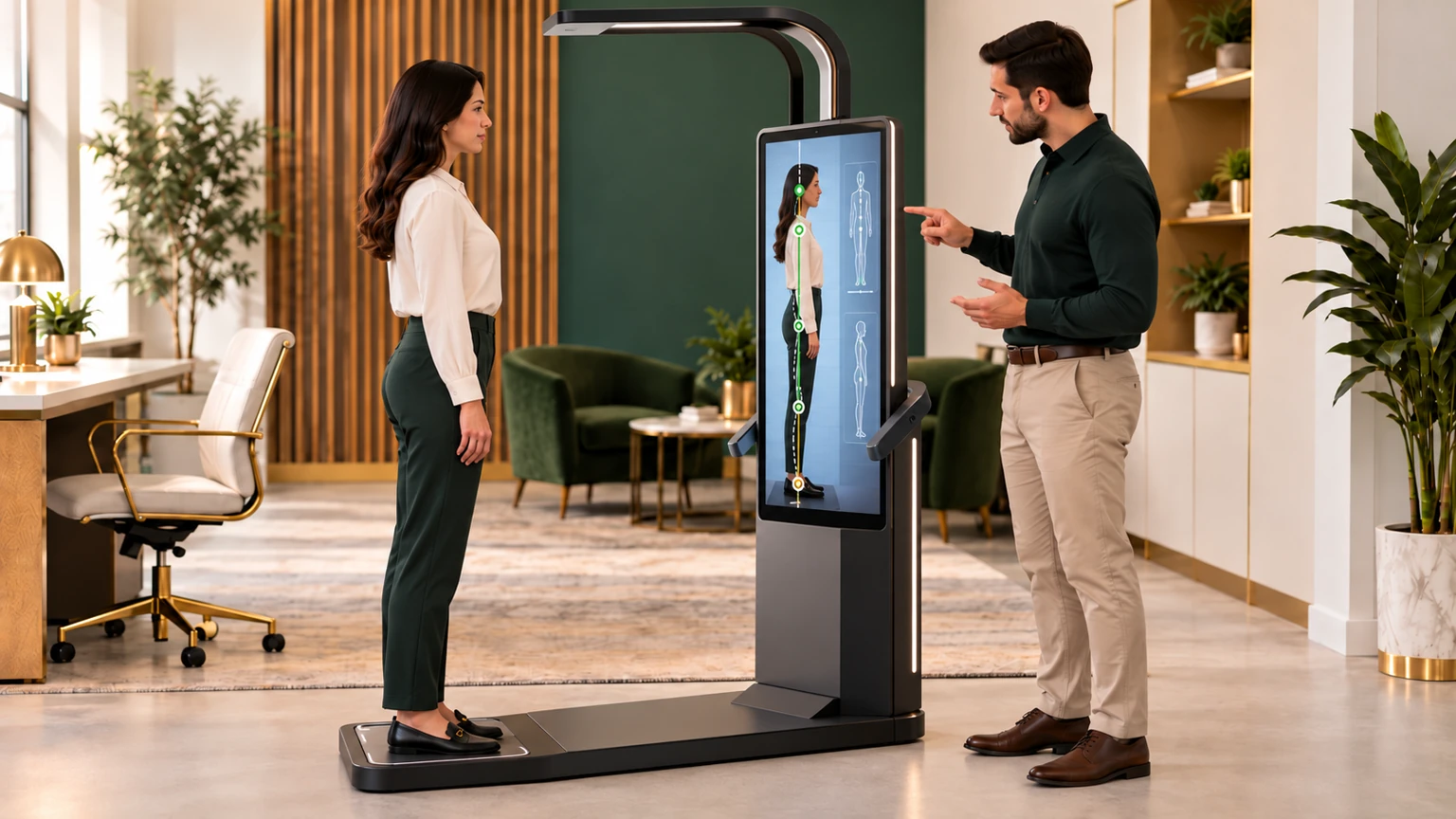
Posture analysis is an assessment of a person's stance observed from the front, side and back. In corporate settings it is usually done with photo or device-assisted measurement and gives the person a visual summary of their posture. Posture analysis is not a diagnosis; anyone with complaints should see a doctor or physiotherapist.
How is it done at work?
A quiet room and short appointment slots are enough for posture analysis in the office. The employee is assessed in their clothes and the specialist then shares personal suggestions.
- Short briefing and consent
- Front, side and back posture assessment
- Results shared privately with the person
- Practical suggestions for desk work
How are the results used?
Results are personal and shared with the employee; only anonymous, aggregated information (such as attendance) should be shared with the organisation. When analysis is combined with a posture and ergonomics workshop or a desk exercise programme, employees find it easier to carry suggestions into daily routines.
Small but useful desk adjustments
Keeping the top of the screen near eye level, feet flat on the floor, the back supported by the chair and getting up to move at regular intervals are commonly recommended in occupational health guidance.
Sources
This article is general information, not medical advice.