
Discuss the purpose and scope first
Back massage at work can form part of a corporate service in which an employee takes a short individual session over clothing. The practitioner explains the areas of focus, duration and method beforehand. This article introduces the process; it is not professional massage training or a personalised treatment plan. Effects vary with the application and the individual, and treatment outcomes are not guaranteed.
Prepare the space and supported seating
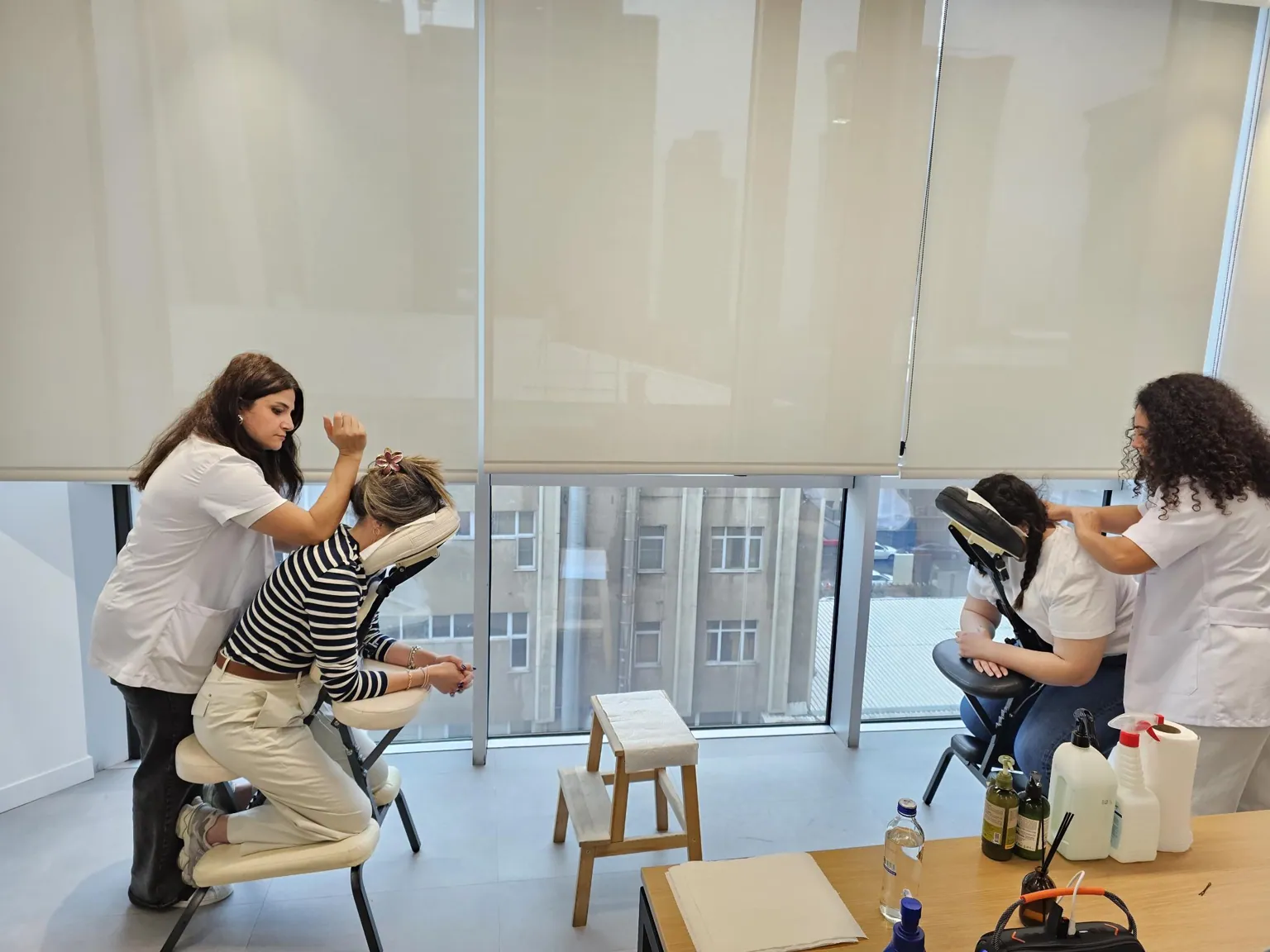
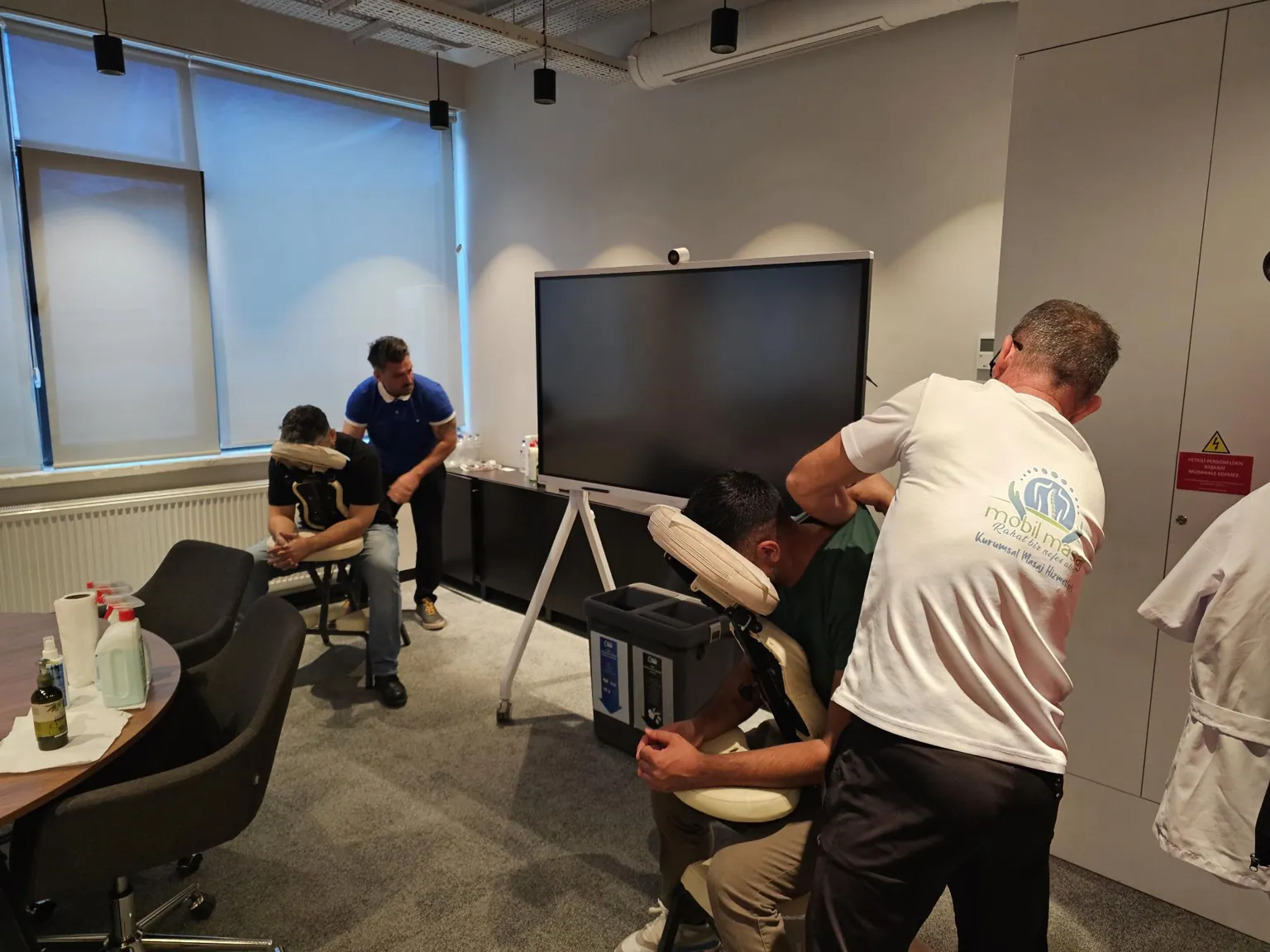
Choose a calm, accessible area with room to move around it. The practitioner adjusts the ergonomic massage chair’s face, trunk and arm supports to the participant. They should not have to strain their neck or lower back to hold a position. Discuss comfort before starting and readjust supports if needed.
How does the back and shoulder session proceed?
With the participant’s agreement, the practitioner begins around the back and shoulders. Pressure and application area are adjusted to feedback; the same intensity or sequence is not used for everyone. Strong pressure, loading the spine, sudden neck turns or forceful stretching are not requirements of an office break. If pain or discomfort occurs, the participant should say so immediately and the session should stop.
Communication before and during the session
Participation is voluntary. Discuss personal suitability with the relevant healthcare professional beforehand if needed. Where necessary, health details are discussed privately with the specialist rather than entered on shared workplace lists. Participants can decline, request changes or end the session at any stage. Massage should not delay healthcare for a concern that needs assessment.
Plan the session within the working day
After the session, the participant leaves the chair without rushing and hygiene preparation takes place for the next person. Include staff rest and meal breaks as well as session time in the corporate schedule. A 15-minute arrangement and shorter sessions have different capacities. Share employee numbers, working hours and available space to plan a timetable for your organisation.
Sources
This article is general information, not medical advice.